 Public Private Partnerships. Perhaps Lower Manhattan’s greatest asset is the strength of its private sector, particularly the financial institutions. Private sector employees utilize the waterfront on a daily basis; they drink at the bars, eat at the restaurants, and sit on the furniture during their lunch breaks. The City must harness this presence by fully involving it in the process. This will generate excitement about the plan and strengthen public discourse, possibly resulting in new design proposals. It may also lead to funding sources.
Master Plan of Land Uses. Although the Fulton Street Fish Market is now defunct, there remains viable infrastructure just north of the South Street Seaport. This infrastructure can house various uses, including newly proposed housing units and the Drawing Center that was once slated for Ground Zero. Whatever the end uses, this space must be mixed and capable of creating density on the streets. With the infrastructure already present, conversions have been initiated. A challenge is creating viable corridors from the street grid to these sites. The FDR is a menacing presence above the property; therefore mechanisms must be created to pull pedestrians to these spaces. The park designed for Peck Slip is an option to draw people to this area (http://www.nyc.gov/html/dcp/pdf/erw/erw_6_slip_projects.pdf).
Realistic Business Plan. This concept is less of a worry for the South Street Seaport area. Already an economic engine with over seven million visitors per year, there is a realistic expectation that this area can quickly be converted successfully. Conversion of old warehouses has begun on nearby streets and smaller retail and restaurants are springing up.
Local Community Buy-in. Community involvement for converting the former fish market into a viable use is instrumental in attracting the types of amenities that will sustain the project for years to come. Yes, the area is well served by a tourist population, but there are people who live here who would like public input. As a resident of the Seaport area, I know that one of its greatest needs is a supermarket. This need must be expressed in public meetings. Hopefully the ULURP process will guarantee involvement of the community boards and the Manhattan Borough President’s office; it is up to these bodies to initiate a thoughtful, comprehensive discourse.
Smart Design. How many times have we seen good projects turn into disasters because of cheesy, lackluster, unintelligent design? A design that embraces the street and its pedestrians will be a step in the right direction. The final design should be aimed at creating a critical mass at the street level, so spaces are well utilized. Again, this is a challenge with the FDR covering the area. But as we have recently seen, unique uses and designs for these spaces are being proposed throughout the city; the Highline and this project come to mind. Areas under bridges and highways, once scary and dark, are now ripe areas for development. A ground floor retail design with apartment units above is a good start for the old Fulton Fish Market infrastructure.
Public Private Partnerships. Perhaps Lower Manhattan’s greatest asset is the strength of its private sector, particularly the financial institutions. Private sector employees utilize the waterfront on a daily basis; they drink at the bars, eat at the restaurants, and sit on the furniture during their lunch breaks. The City must harness this presence by fully involving it in the process. This will generate excitement about the plan and strengthen public discourse, possibly resulting in new design proposals. It may also lead to funding sources.
Master Plan of Land Uses. Although the Fulton Street Fish Market is now defunct, there remains viable infrastructure just north of the South Street Seaport. This infrastructure can house various uses, including newly proposed housing units and the Drawing Center that was once slated for Ground Zero. Whatever the end uses, this space must be mixed and capable of creating density on the streets. With the infrastructure already present, conversions have been initiated. A challenge is creating viable corridors from the street grid to these sites. The FDR is a menacing presence above the property; therefore mechanisms must be created to pull pedestrians to these spaces. The park designed for Peck Slip is an option to draw people to this area (http://www.nyc.gov/html/dcp/pdf/erw/erw_6_slip_projects.pdf).
Realistic Business Plan. This concept is less of a worry for the South Street Seaport area. Already an economic engine with over seven million visitors per year, there is a realistic expectation that this area can quickly be converted successfully. Conversion of old warehouses has begun on nearby streets and smaller retail and restaurants are springing up.
Local Community Buy-in. Community involvement for converting the former fish market into a viable use is instrumental in attracting the types of amenities that will sustain the project for years to come. Yes, the area is well served by a tourist population, but there are people who live here who would like public input. As a resident of the Seaport area, I know that one of its greatest needs is a supermarket. This need must be expressed in public meetings. Hopefully the ULURP process will guarantee involvement of the community boards and the Manhattan Borough President’s office; it is up to these bodies to initiate a thoughtful, comprehensive discourse.
Smart Design. How many times have we seen good projects turn into disasters because of cheesy, lackluster, unintelligent design? A design that embraces the street and its pedestrians will be a step in the right direction. The final design should be aimed at creating a critical mass at the street level, so spaces are well utilized. Again, this is a challenge with the FDR covering the area. But as we have recently seen, unique uses and designs for these spaces are being proposed throughout the city; the Highline and this project come to mind. Areas under bridges and highways, once scary and dark, are now ripe areas for development. A ground floor retail design with apartment units above is a good start for the old Fulton Fish Market infrastructure.
8.24.2006
Lower Manhattan Waterfront Faces Many Challenges
The waterfront in Lower Manhattan is undergoing unprecedented change. The City Planning Commission’s proposal for connecting the Hudson and East River waterfronts presents endless opportunities to create something unique that will connect local residents with the water. The following are some ideas for the creation of an imaginative waterfront in Lower Manhattan.
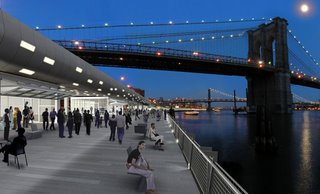 Public Private Partnerships. Perhaps Lower Manhattan’s greatest asset is the strength of its private sector, particularly the financial institutions. Private sector employees utilize the waterfront on a daily basis; they drink at the bars, eat at the restaurants, and sit on the furniture during their lunch breaks. The City must harness this presence by fully involving it in the process. This will generate excitement about the plan and strengthen public discourse, possibly resulting in new design proposals. It may also lead to funding sources.
Master Plan of Land Uses. Although the Fulton Street Fish Market is now defunct, there remains viable infrastructure just north of the South Street Seaport. This infrastructure can house various uses, including newly proposed housing units and the Drawing Center that was once slated for Ground Zero. Whatever the end uses, this space must be mixed and capable of creating density on the streets. With the infrastructure already present, conversions have been initiated. A challenge is creating viable corridors from the street grid to these sites. The FDR is a menacing presence above the property; therefore mechanisms must be created to pull pedestrians to these spaces. The park designed for Peck Slip is an option to draw people to this area (http://www.nyc.gov/html/dcp/pdf/erw/erw_6_slip_projects.pdf).
Realistic Business Plan. This concept is less of a worry for the South Street Seaport area. Already an economic engine with over seven million visitors per year, there is a realistic expectation that this area can quickly be converted successfully. Conversion of old warehouses has begun on nearby streets and smaller retail and restaurants are springing up.
Local Community Buy-in. Community involvement for converting the former fish market into a viable use is instrumental in attracting the types of amenities that will sustain the project for years to come. Yes, the area is well served by a tourist population, but there are people who live here who would like public input. As a resident of the Seaport area, I know that one of its greatest needs is a supermarket. This need must be expressed in public meetings. Hopefully the ULURP process will guarantee involvement of the community boards and the Manhattan Borough President’s office; it is up to these bodies to initiate a thoughtful, comprehensive discourse.
Smart Design. How many times have we seen good projects turn into disasters because of cheesy, lackluster, unintelligent design? A design that embraces the street and its pedestrians will be a step in the right direction. The final design should be aimed at creating a critical mass at the street level, so spaces are well utilized. Again, this is a challenge with the FDR covering the area. But as we have recently seen, unique uses and designs for these spaces are being proposed throughout the city; the Highline and this project come to mind. Areas under bridges and highways, once scary and dark, are now ripe areas for development. A ground floor retail design with apartment units above is a good start for the old Fulton Fish Market infrastructure.
Public Private Partnerships. Perhaps Lower Manhattan’s greatest asset is the strength of its private sector, particularly the financial institutions. Private sector employees utilize the waterfront on a daily basis; they drink at the bars, eat at the restaurants, and sit on the furniture during their lunch breaks. The City must harness this presence by fully involving it in the process. This will generate excitement about the plan and strengthen public discourse, possibly resulting in new design proposals. It may also lead to funding sources.
Master Plan of Land Uses. Although the Fulton Street Fish Market is now defunct, there remains viable infrastructure just north of the South Street Seaport. This infrastructure can house various uses, including newly proposed housing units and the Drawing Center that was once slated for Ground Zero. Whatever the end uses, this space must be mixed and capable of creating density on the streets. With the infrastructure already present, conversions have been initiated. A challenge is creating viable corridors from the street grid to these sites. The FDR is a menacing presence above the property; therefore mechanisms must be created to pull pedestrians to these spaces. The park designed for Peck Slip is an option to draw people to this area (http://www.nyc.gov/html/dcp/pdf/erw/erw_6_slip_projects.pdf).
Realistic Business Plan. This concept is less of a worry for the South Street Seaport area. Already an economic engine with over seven million visitors per year, there is a realistic expectation that this area can quickly be converted successfully. Conversion of old warehouses has begun on nearby streets and smaller retail and restaurants are springing up.
Local Community Buy-in. Community involvement for converting the former fish market into a viable use is instrumental in attracting the types of amenities that will sustain the project for years to come. Yes, the area is well served by a tourist population, but there are people who live here who would like public input. As a resident of the Seaport area, I know that one of its greatest needs is a supermarket. This need must be expressed in public meetings. Hopefully the ULURP process will guarantee involvement of the community boards and the Manhattan Borough President’s office; it is up to these bodies to initiate a thoughtful, comprehensive discourse.
Smart Design. How many times have we seen good projects turn into disasters because of cheesy, lackluster, unintelligent design? A design that embraces the street and its pedestrians will be a step in the right direction. The final design should be aimed at creating a critical mass at the street level, so spaces are well utilized. Again, this is a challenge with the FDR covering the area. But as we have recently seen, unique uses and designs for these spaces are being proposed throughout the city; the Highline and this project come to mind. Areas under bridges and highways, once scary and dark, are now ripe areas for development. A ground floor retail design with apartment units above is a good start for the old Fulton Fish Market infrastructure.
Public Private Partnerships. Perhaps Lower Manhattan’s greatest asset is the strength of its private sector, particularly the financial institutions. Private sector employees utilize the waterfront on a daily basis; they drink at the bars, eat at the restaurants, and sit on the furniture during their lunch breaks. The City must harness this presence by fully involving it in the process. This will generate excitement about the plan and strengthen public discourse, possibly resulting in new design proposals. It may also lead to funding sources.
Master Plan of Land Uses. Although the Fulton Street Fish Market is now defunct, there remains viable infrastructure just north of the South Street Seaport. This infrastructure can house various uses, including newly proposed housing units and the Drawing Center that was once slated for Ground Zero. Whatever the end uses, this space must be mixed and capable of creating density on the streets. With the infrastructure already present, conversions have been initiated. A challenge is creating viable corridors from the street grid to these sites. The FDR is a menacing presence above the property; therefore mechanisms must be created to pull pedestrians to these spaces. The park designed for Peck Slip is an option to draw people to this area (http://www.nyc.gov/html/dcp/pdf/erw/erw_6_slip_projects.pdf).
Realistic Business Plan. This concept is less of a worry for the South Street Seaport area. Already an economic engine with over seven million visitors per year, there is a realistic expectation that this area can quickly be converted successfully. Conversion of old warehouses has begun on nearby streets and smaller retail and restaurants are springing up.
Local Community Buy-in. Community involvement for converting the former fish market into a viable use is instrumental in attracting the types of amenities that will sustain the project for years to come. Yes, the area is well served by a tourist population, but there are people who live here who would like public input. As a resident of the Seaport area, I know that one of its greatest needs is a supermarket. This need must be expressed in public meetings. Hopefully the ULURP process will guarantee involvement of the community boards and the Manhattan Borough President’s office; it is up to these bodies to initiate a thoughtful, comprehensive discourse.
Smart Design. How many times have we seen good projects turn into disasters because of cheesy, lackluster, unintelligent design? A design that embraces the street and its pedestrians will be a step in the right direction. The final design should be aimed at creating a critical mass at the street level, so spaces are well utilized. Again, this is a challenge with the FDR covering the area. But as we have recently seen, unique uses and designs for these spaces are being proposed throughout the city; the Highline and this project come to mind. Areas under bridges and highways, once scary and dark, are now ripe areas for development. A ground floor retail design with apartment units above is a good start for the old Fulton Fish Market infrastructure.


Subscribe to:
Comments (Atom)